

The Architecture of Intimacy: Navigating the Indian Undercurrent
A quiet exploration of how lingerie in India is evolving — from hushed necessity to intentional self-expression, shaped by climate, culture, and the right to personal comfort.
Mulmul cotton — the original language of comfort
The Cotton Commandment
In India, our first introduction to lingerie is often a hushed conversation in a dimly lit corner of a local market. A mother pointing, a shopkeeper reaching for something wrapped in thin plastic. There is no fitting room. There is no conversation about fit.
But as we move toward a more vocal ownership of our bodies, the garment changes. It is no longer a secret to be hidden, but a foundation to be chosen. Whether it's the breathability of organic cotton against the Mumbai humidity or the precision of a seamless nude under a Kanjeevaram silk, the choice is finally ours.
"Lingerie in India isn't about lace. It's a thermal layer, a structural layer, a layer of quiet defiance."
The Indian climate demands more from intimate wear than aesthetics. Forty-degree summers in Delhi. The relentless coastal humidity of Chennai. The damp monsoons of Kerala. Cotton isn't a preference here — it's a prescription. And yet, for decades, the market offered synthetic imports designed for air-conditioned European apartments. The disconnect was not just sartorial. It was physical.
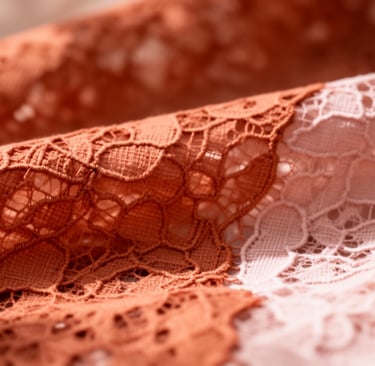
Lace — reimagined through an Indian lens
The Saree Silhouette
Consider the engineering required to be invisible. A saree blouse sits at a specific neckline — often low in the back, sometimes sheer at the shoulders. A salwar kameez demands a seamless line from collarbone to waist. A lehenga choli leaves the midriff exposed, requiring support without structure that shows.
Global lingerie brands have historically designed for the T-shirt. The tank top. The cocktail dress. The geometry of Indian ethnic wear — with its exposed backs, layered transparencies, and structured drapes — demands a fundamentally different approach. One that starts not with the garment on top, but with the body underneath.
The Invisible Layer
The best lingerie for Indian wear is the one you forget you're wearing. It shapes without constricting, supports without announcing, and breathes without compromise. It is structural intentionality at its most intimate.
Indian women have always been architects of the invisible layer. The petticoat under the saree. The slip beneath the chiffon. What's changing now is that this architecture is being designed with the same care and intelligence as the garment it supports. Brands are finally understanding that 'nude' comes in a hundred shades of brown, that a T-back isn't always the answer, and that comfort isn't the absence of beauty — it's the beginning of it.
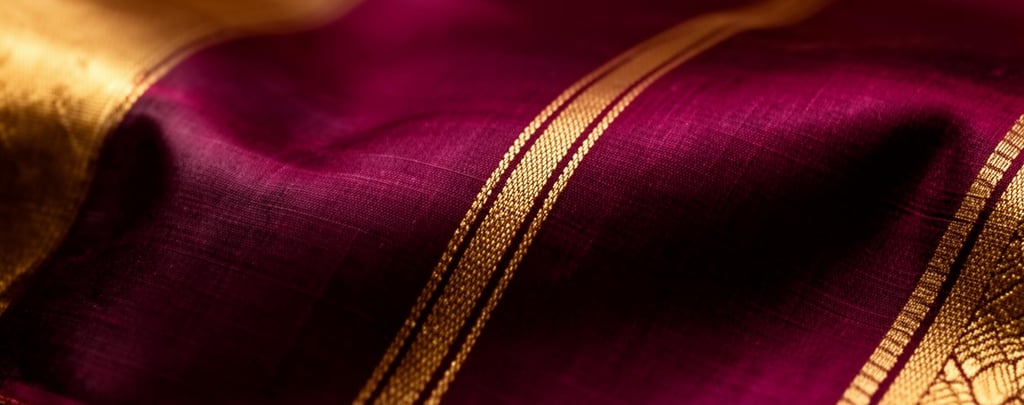
Kanjeevaram silk — every layer beneath it matters
The Shift in Agency
There is a generation of Indian women for whom buying lingerie is no longer an act of embarrassment, but an act of self-knowledge. They know their measurements. They understand the difference between a balconette and a full-cup. They choose the wire or reject it based on how their day looks — not on a marketer's definition of desirability.
This shift isn't loud. It doesn't arrive with a billboard or a viral campaign. It arrives in the quiet moment of a woman buying herself something considered - not for an occasion, not for someone else, but because she understands that the most fundamental garment in her wardrobe deserves the most fundamental care.
"The revolution isn't in what we're wearing on top. It's in what we've chosen to put on first."
We are past the age of the single-shade 'skin colour' bra tucked behind a curtain. We are entering an era where an Indian woman can walk into a store — or open an app — and find something that understands her body's climate, her wardrobe's architecture, and her own definition of comfort. Not a Western ideal translated. Not a traditional expectation preserved. Something entirely, intentionally, hers.



© 2025 Buzimex Enterprises. All Rights Reserved.


Sweetbury Fashionaire is a retail outlet operated by Buzimex Enterprises.
GSTIN: 27BRDPK6391P1Z1
IEC Code: BRDPK6391P